
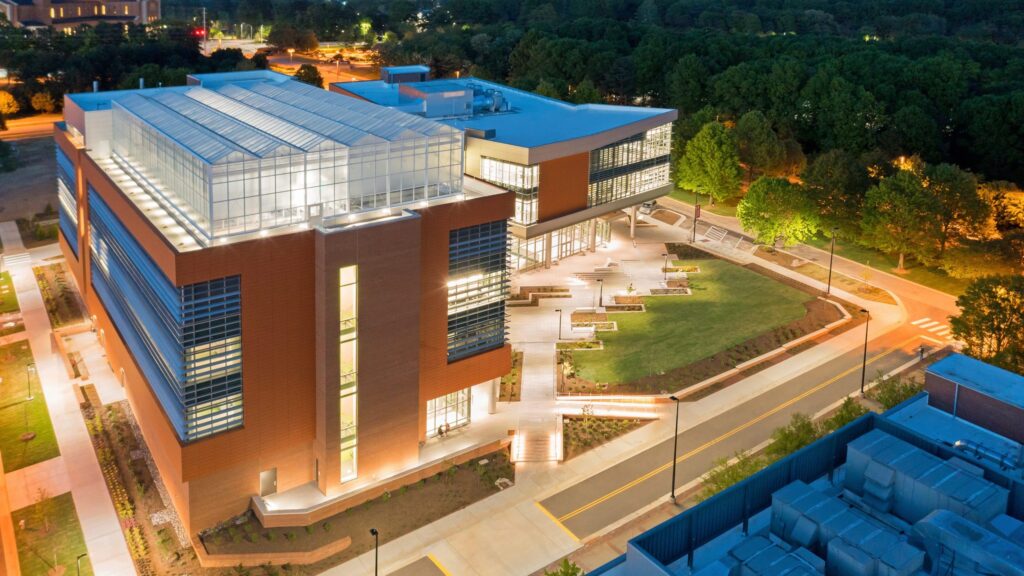
In a breakthrough for the intersection of agriculture and climate science, NC State alumnus Eli Hornstein and his startup, Elysia Creative Biology, are making waves within the North Carolina Plant Sciences Initiative (N.C. PSI) in Raleigh. Leveraging cutting-edge bioengineering, the firm is developing a novel specialty feed designed to significantly inhibit methane production in livestock. As of early February 2026, the startup is being hailed as a centerpiece of North Carolina’s growing “green” AgTech corridor, offering a scalable solution to one of the most persistent environmental challenges in global food production.
The economic and social implications for North Carolina are profound. As a state with a massive livestock industry, particularly in the eastern coastal plains, the adoption of Elysia’s bioengineered feed could allow NC farmers to meet increasingly stringent environmental regulations without sacrificing productivity. By integrating this technology, the state’s agricultural sector—already a $100 billion industry—could transition into a more sustainable model, attracting further ESG (Environmental, Social, and Governance) investments. Furthermore, the collaboration between Elysia and the N.C. PSI highlights the “brain-gain” effect, where local university talent stays in-state to launch high-growth ventures.
Beyond the laboratory, Hornstein’s work underscores a shift in how the public perceives biotechnology in farming. By focusing on the microbiome of cattle, Elysia Creative Biology is proving that high-tech interventions can coexist with traditional farming practices. This synergy not only protects the environment by reducing greenhouse gas emissions but also bolsters the global competitiveness of North Carolina’s agricultural exports in a market that increasingly demands carbon-neutral products.
In summary, Elysia Creative Biology represents the future of North Carolina’s innovation economy. By turning a bold scientific vision into a practical agricultural tool, Eli Hornstein is positioning the state as a global leader in AgTech, ensuring that North Carolina’s oldest industry remains its most innovative.
Source: NC State College of Agriculture and Life Sciences, Feb 2, 2026.